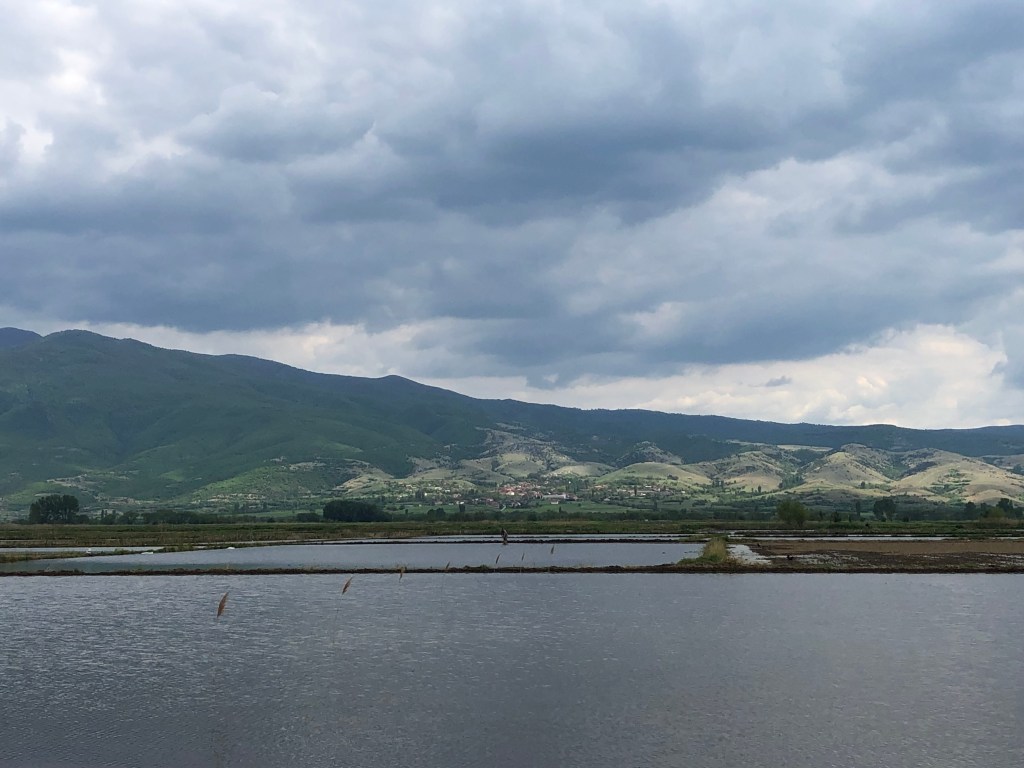
A few weeks ago, the rice fields that encircle my village began filling. My town appears to float on top of a lake from a distance. I have read that rice fields cover about 18% of my region in North Macedonia, but that seems low to me. Everywhere I turn, there are rice fields. My village is famous for its Golden Rice. The grain of the rice is larger than any rice I have seen, and it tastes truly remarkable. The region I am in was once known as the Yugoslavian “rice bowl” (or so I have been told by many of the farmers). The same families have farmed these lands for generations, and the methods and equipment used haven’t changed much in all those years. My host dad’s tractor is ancient and has been used for 3 generations!
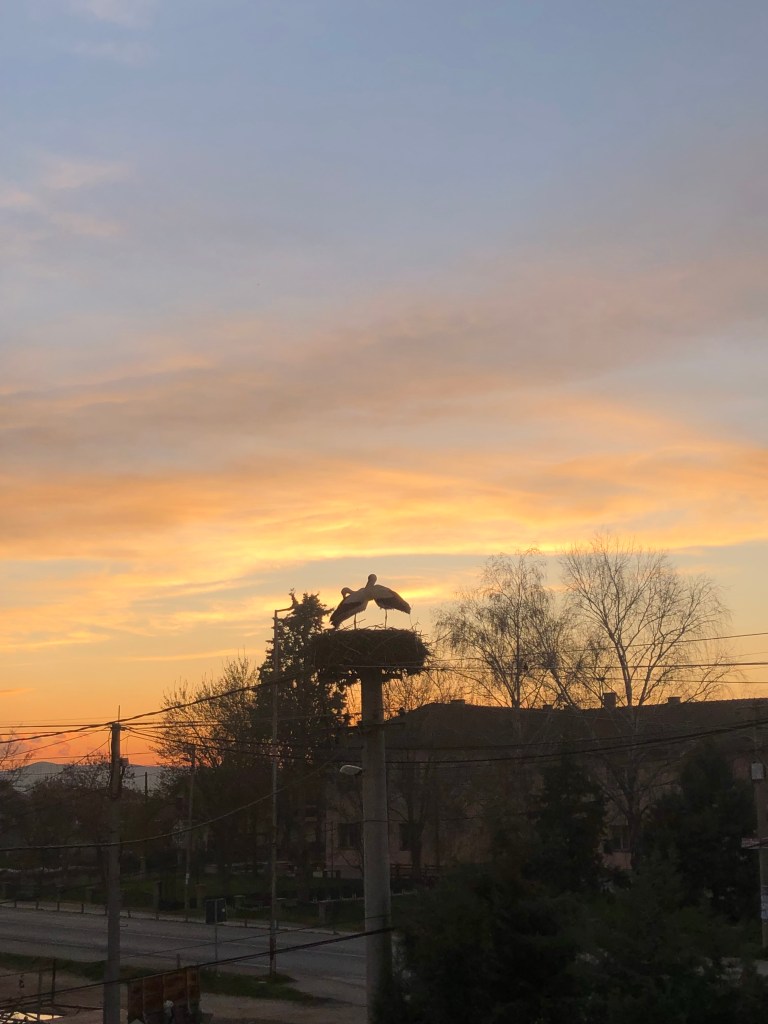
Over the past couple of months, various birds migrated from Africa, which enjoy feeding on insects and small prey in and around the rice fields. The most striking bird is the White Stork. They are a symbol of happiness and good luck in our area. This stork lives in Northern Africa during the fall and winter months and travels to my village for the spring and summer. The storks are such large birds, and they can only fly over land because they need land thermal air currents not found above water. This adds quite a long distance to their travel, and they must pass through Türkiye or the Iberian Peninsula to reach their destination. White storks build their nests on houses and the tops of electrical poles. They build massive nests – one in a nearby village is six feet across. The nest near my balcony is enormous, as seen in these pictures. The eggs recently hatched, and the storks are feeding their young in the photos.

This spring, we have had unseasonably cold and rainy weather, and the weather has affected the storks’ birth rates. Usually, most storks will raise 3-4 young yearly; however, this year, most nests in my village have only 1-2, but a few have 3. Not only did the strange weather affect the birth rates, but it may have also limited the available food for the storks. When White Storks experience a food shortage, they are known to sacrifice their chick(s) from the nest to protect the family’s well-being. This happened in a nest near my house, and the sacrifice of the young storks shows the brutality of nature; and the respect it deserves.

The people in my town are highly protective of the storks. While the local villagers are used to the storks and the nests, I am still astounded by their presence, and I often eat dinner on my balcony watching the sunset along with the nesting storks. As I finished writing this post on my balcony, my host Mom yelled upstairs to tell me they had received a call that their son and his wife had welcomed their first child. Her son and his family live in Austria, and this was their first grandchild, so it was an exciting day. It seems as if the storks did bring good luck and happiness to my host family this year.


 To MAK and Back
Leave a reply to Pat Riley Cancel reply