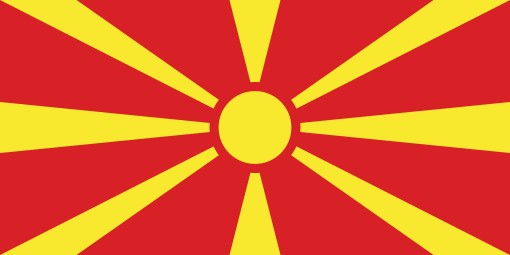
Thankfully, a long cold winter is coming to a close. The winter break for school in North Macedonia is a long one and this year began on December 29 and ended on January 22. With school out, I spent time with my host family celebrating the Orthodox Christmas, which was on January 7, along with several other seasonal holidays. The highlight of winter break was a trip to Turkey with one of my Fulbright Scholar friends. In prior posts, I mentioned the Ottoman Empire ruled the Balkans for over 500 years, leaving behind aspects of Turkish culture that can still be seen in North Macedonia today. Though North Macedonia is a predominately Christian country, many mosques built by the Ottomans remain, and other aspects of Turkish culture can be seen in the food and traditions here.
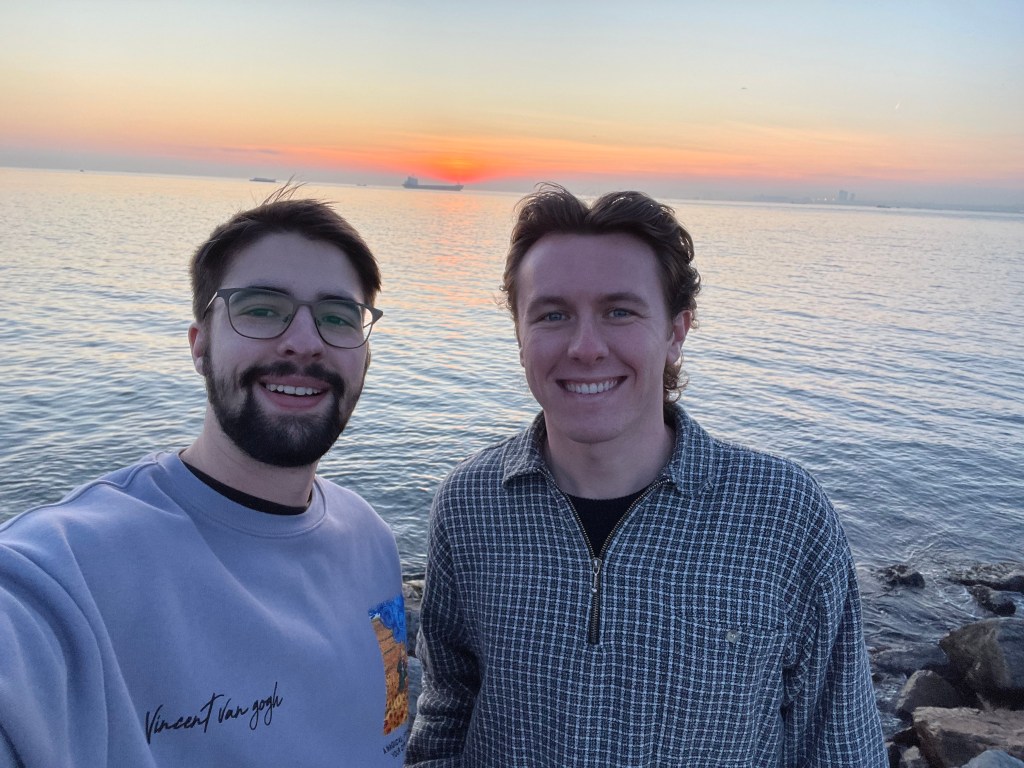
In January, I set out with my friend to Istanbul for four days. Istanbul is 400 miles from where I live, so we took a quick, uneventful flight. Istanbul is unique in that the city is split across two continents: Europe and Asia. The Bosphorus Straight, which connects the Black Sea to the Mediterranean Sea, passes through the city and separates Europe from Asia. The city is home to 17 million people and possesses a great diversity of cultures. The primary language in Istanbul is Turkish, but many other languages are spoken, including English. While some words in the Macedonian language are taken from Turkish, my ability to speak Macedonian did not help me much. Fortunately, many people we met spoke English. In preparing for the trip, I learned some Turkish phrases and words. My efforts at Turkish produced smiles but little understanding with the people I met. The people were very kind and helpful.

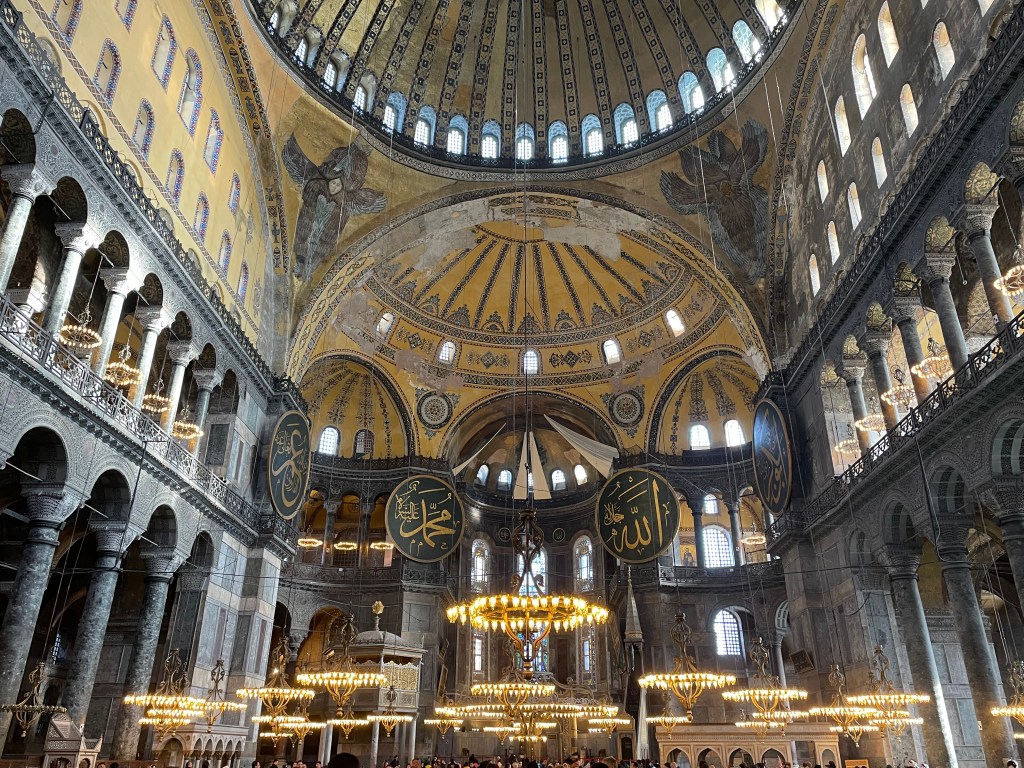
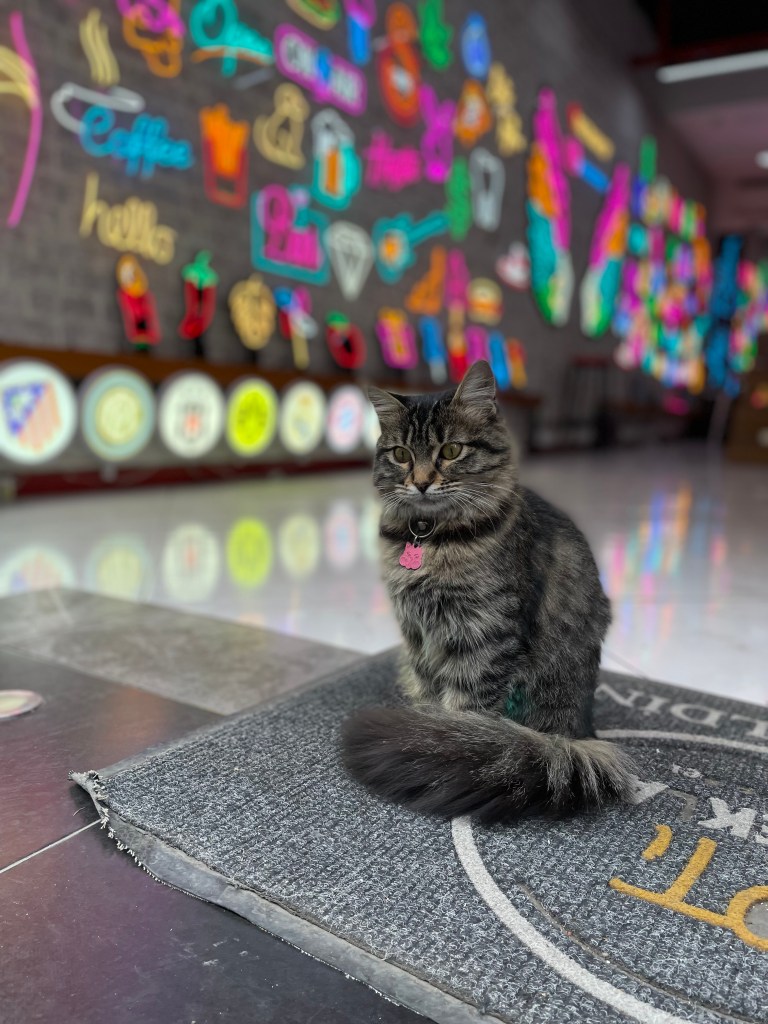
As it turned out, four days in Istanbul only allowed us to scratch the surface of the sights to see in the city. Istanbul is an ancient city, and its history is complex. As an example, we visited the Hagia Sophia, which was built as an Eastern Orthodox cathedral by the Byzantines in the 500s, when the city was known as Constantinople. For a period of time during the Crusades, the Hagia Sophia was a Catholic church, but in the 1400s, when the Ottomans conquered Constantinople, the Hagia Sophia became a mosque, and it remains a mosque/museum today. Whether we were visiting the Hagia Sophia or Ottoman palaces, this city is a dream come true for a history fan. For the most part, we stuck to the European “Old” side of the town and visited many mosques and museums. On our last day, we took a ferry to the island of Buyukada in the Sea of Marmara to the South of Istanbul. We rented bikes and rode around the island. Buyukada is a beautiful island filled with ancient homes and buildings. Buyukada, like Istanbul, is home to many cats, something I now notice since I have officially become a “cat person” while in the Peace Corps. No disrespect to my black lab Roux back home in Alabama, but I have learned to love cats, and Buyukada has the most interesting cats I’ve seen on my adventures. Istanbul and Buyukada are cat cities, and the people take great pride in their cats. They are well cared for, and I took many photos of these beautiful cats. Overall, Istanbul has been my favorite destination on my trips outside of North Macedonia, and I hope to go back again to explore more of the city.
Beyond this trip, I’ve dedicated my efforts to two projects over the past few months. First, the Peace Corps recently approved my grant proposal to install twenty-three new dry-erase boards in classrooms across all my village schools. Additionally, eight projectors will be distributed to provide teachers with diverse online materials. We plan to purchase 400 markers, 100 erasers, and 200 magnets to ensure a lasting supply for teachers. My counterparts and I will conduct two training sessions, focusing on proper maintenance and offering helpful teaching strategies and activities to enhance classrooms with these new materials. I’m excited to kick off these sessions and put these materials to good use. Also, in December, I had the opportunity to participate in an interview for a Peace Corps volunteers’ blog based in Armenia. The project aims to feature interviews with at least one volunteer in every Peace Corps country. The website provides valuable information for current and future volunteers. If you want to check out my interview, you can click HERE. Make sure to check out my photos tab for for pictures!
If you would like to know more about the project and support, click HERE
До следниот пат (Until next time)!
 To MAK and Back
Leave a comment